Physics and Chemistry · 1867 to 1934
Meet Marie Curie
Marie Curie was the first woman to win a Nobel Prize and the first person to win one in two sciences
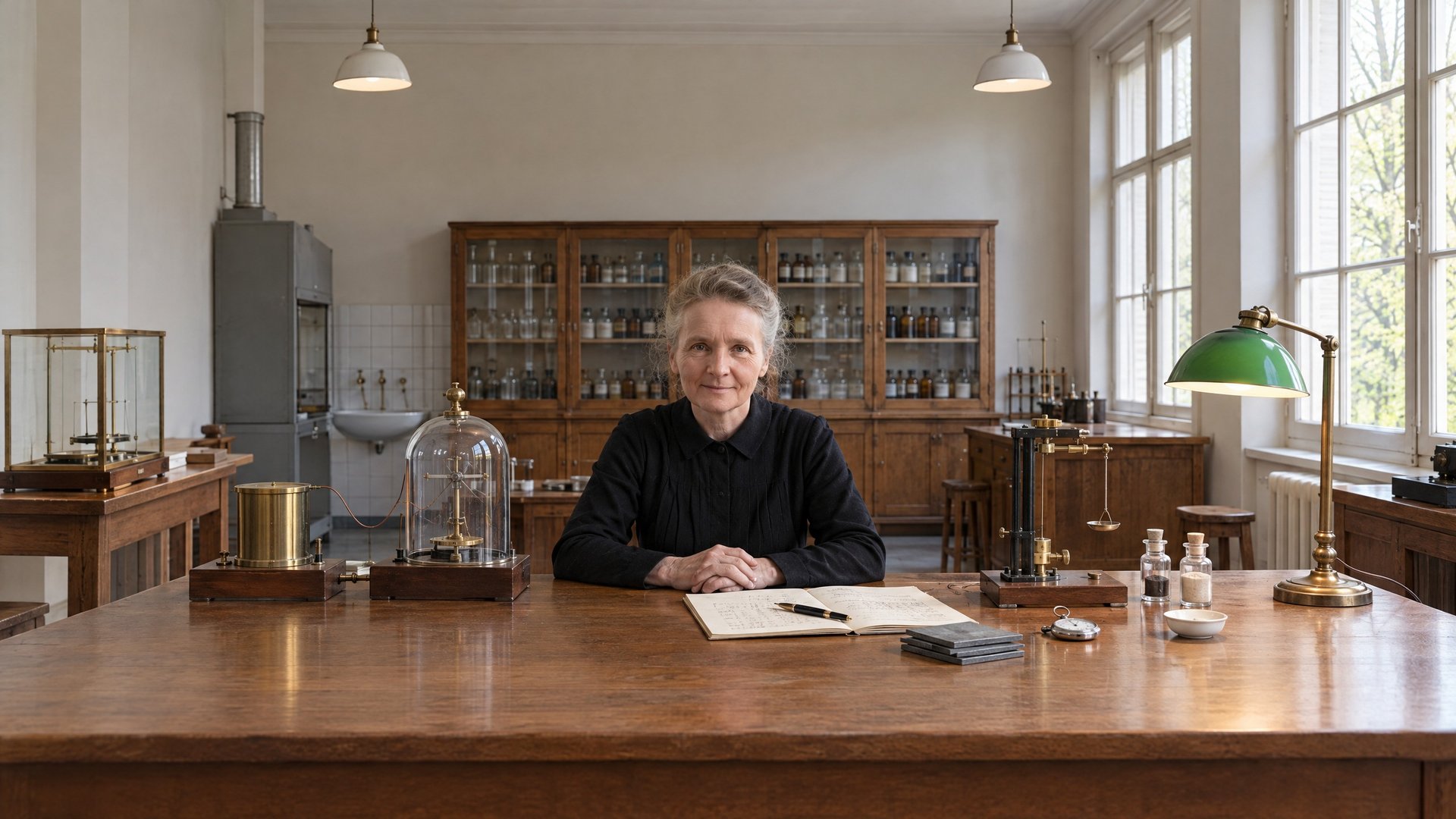
Ever wondered what Marie Curie would say if you could ask? Ask anything, out loud or by typing, and see the world as it looked in Paris, France, 1931
Who Marie Curie was
Marie Curie was born Maria Skłodowska in Warsaw in 1867, when Poland was under Russian rule and women could not attend university there. In 1891 Curie moved to Paris to study at the Sorbonne.
Working with Pierre Curie in a converted shed, Marie Curie discovered two new elements in 1898, polonium and radium, and gave science the word radioactivity.
Curie won the Nobel Prize in Physics in 1903 and in Chemistry in 1911. During the First World War Curie equipped cars with X-ray machines and took them to the front. Marie Curie died in 1934 of an illness caused by years of radiation.
- Known for
- Discovery of PoloniumDiscovery of RadiumResearch on Radioactivity
- Born
- Warsaw, Poland, 1867
- Lived in
- Warsaw, PolandParis, France
Life in dates
Marie Curie, year by year
- 1867Born in Warsaw, Poland
- 1891Moves to Paris to study at the Sorbonne
- 1895Marries Pierre Curie
- 1898Discovers polonium and radium
- 1903Shares the Nobel Prize in Physics with Pierre Curie and Henri Becquerel
- 1906Pierre Curie dies, and Marie takes over the teaching post at the Sorbonne
- 1911Wins the Nobel Prize in Chemistry
- 1914Takes mobile X-ray units to the front in the First World War
- 1934Dies in France, aged 66
Start here
Ask anything
Ever tried to read what Marie Curie left behind, then lost interest or found it hard to follow? We built Marie Curie's stories, words and way of talking from it, so you can just ask
What you get
Hear the answer
Ask out loud and Marie Curie answers out loud, like talking to a person
Trust the answers
Every answer shows where it came from, so you can check it
Live the story
A journey is a short film you step into. It walks through the key moments of a life in pictures and sound, and pauses at the hard moments to ask what you would do. New journeys are added over time
Questions
Can I really talk to Marie Curie?
Yes. You ask out loud or by typing and Marie Curie answers. It is a recreation made with AI from what Marie Curie wrote and said, not the real person
Where do the answers come from?
Answers come from the historical record: Marie Curie's own words where they survive, and trusted books about that life. Each answer shows its source, and when the record is silent Marie Curie says so
Is it free?
You can start with a free account. The HistOracle Pass gives you more, and the prices are on the pricing page
Who is it for?
Anyone 13 and over. Schools have their own version for grades 5 to 12