For Museums & Historical Institutions
Let your collection speak for itself.
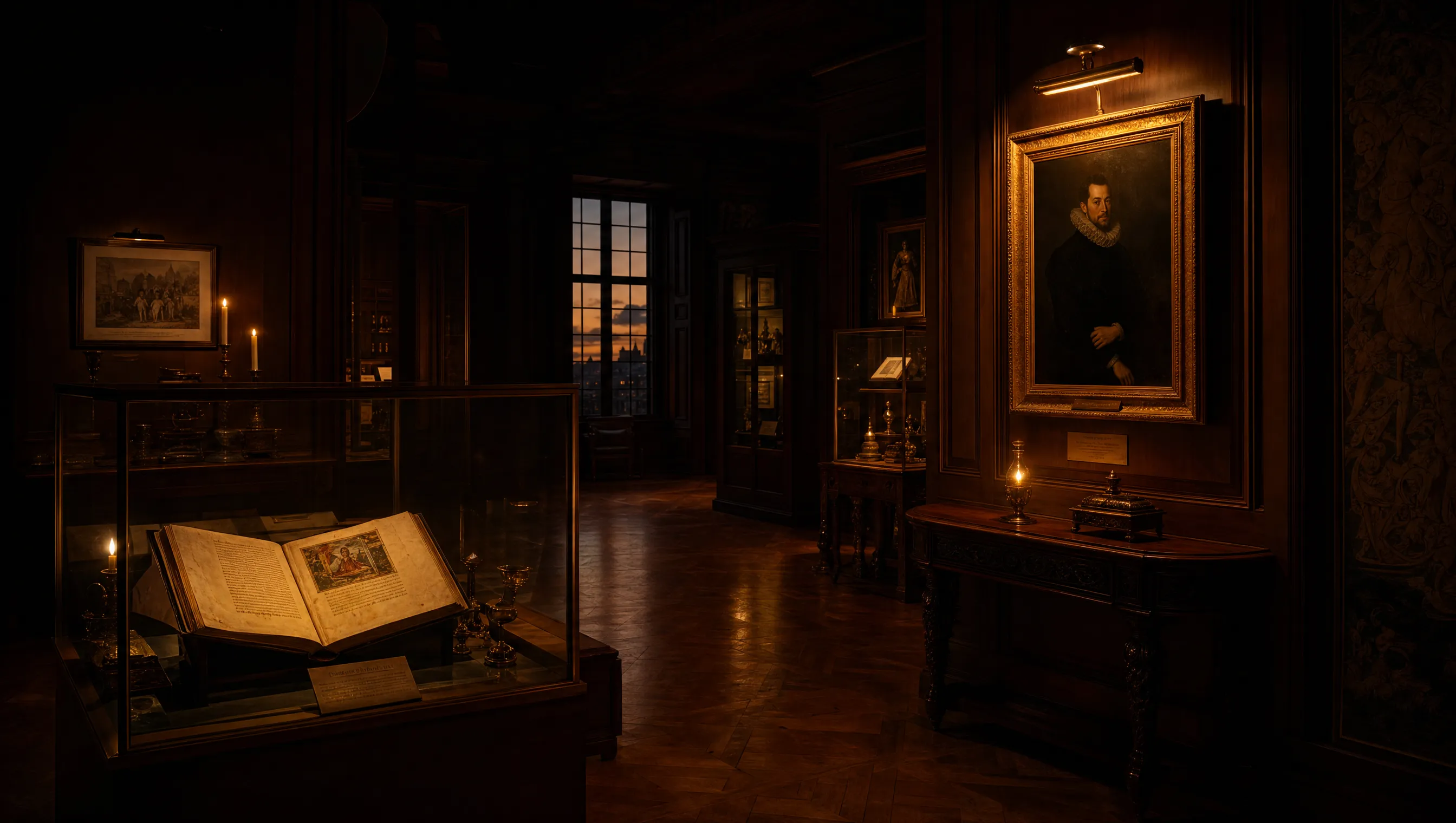
Historacle brings the people in your collection into the room with your visitor. They sit across from the figure and hear it in its own voice, grounded only in your sources, with a citation on every claim.
01The opportunity
Most of what you have collected, most visitors never meet.
In most exhibitions studied, the average visitor spends under twenty minutes (Serrell, 1997) and walks past the archive that holds the deepest stories. Your scholarship lives in PDFs no one opens. The opportunity is not to compete with the artifact. It is to give visitors the conversation that unlocks it.
02How it works
Four ways in. One archive.
A deployment is not a chatbot on a page. Visitors sit across from the people in your collection, in a room rendered around them, and the figure replies in its own voice.
 01
01Conversations
Visitors sit across from the figure and talk, by voice or by typing. It answers in its own register, only from documents you have approved.
 02
02Journeys
Walk visitors into the room where a decision was made, built from a real artifact. The figure narrates; the moment is rendered around the visitor.
 03
03Symposia & Debates
Sit in on a live debate across your collection, figures, schools, and eras, and choose when to interject a controversy your archive already documents.
 04
04Labs & Learning
Turn any conversation into flashcards, quizzes, short videos, and storybooks. Multi-sensory where your archive supports it, always sourced.
03The hard part, done right
Authority you can audit.
Generative AI fabricates, even when it reads from source documents. So a Historacle figure only draws from what you have approved, ships the source with every claim, and refuses what the record does not support. When you cannot audit an AI, you should not ship it. With Historacle, you can.
- Grounded in your archive only. No outside data, no general-web bleed.
- A citation on every claim. Visitor and curator both see the source.
- You author voice, scope, and refusals. The figure is yours, not a template.
- Sensitive material handled deliberately. Contested histories and restricted content are gated during authoring, never improvised.
- Your archive stays yours. No cross-tenant training, no third-party fine-tuning on your corpus, full export on exit.
04Deployment
Wherever your visitor is.
A figure runs in a browser on any device, hosted end to end on our servers. It adds no load to your own site. A few of the ways institutions put their figures in front of visitors today:
Your own website
Your URL, your branding. Institutions embed their figure on their own website this way.
On-site screens
Runs in a browser on the tablets, touchscreens, and desktops you place in a gallery.
Visitors’ own devices
Full experience for the after-hours and remote learner the gallery cannot reach.
Partner & consortium embeds
The same web-view pattern as a site embed, scoped per deployment.
05Frequently asked
The questions buyers ask us first.
How do you keep a figure from making things up or saying something inaccurate?
Someone will try to provoke it. What happens when a visitor asks a bad-faith question?
How do you vet sources, especially for a more recent figure who relies on secondary material?
Where does this live, and will it slow down or crash our own website?
Our audiences range from elementary school to scholars. Can responses adapt without staff reconfiguring it per group?
How do you handle copyright and rights-bound material?
How does this show up on-site, and can it work with our mobile app?
What visitor data do you collect?
Whose voice is it?
Can curators control what the figure knows, says, and refuses to say?
Does this replace our educators and docents?
How is this priced, and how long does it take to stand up?
Your archive has more to say.
Let’s start a conversation about how to give it a voice.